Morgan DiPrimo opens with a simple but uncomfortable premise: real change requires accepting where you actually are right now — not the polished version, not the “I’m fine” version, but the honest one. The more we deflect or shame our current situation, she writes, the longer we prolong healing.
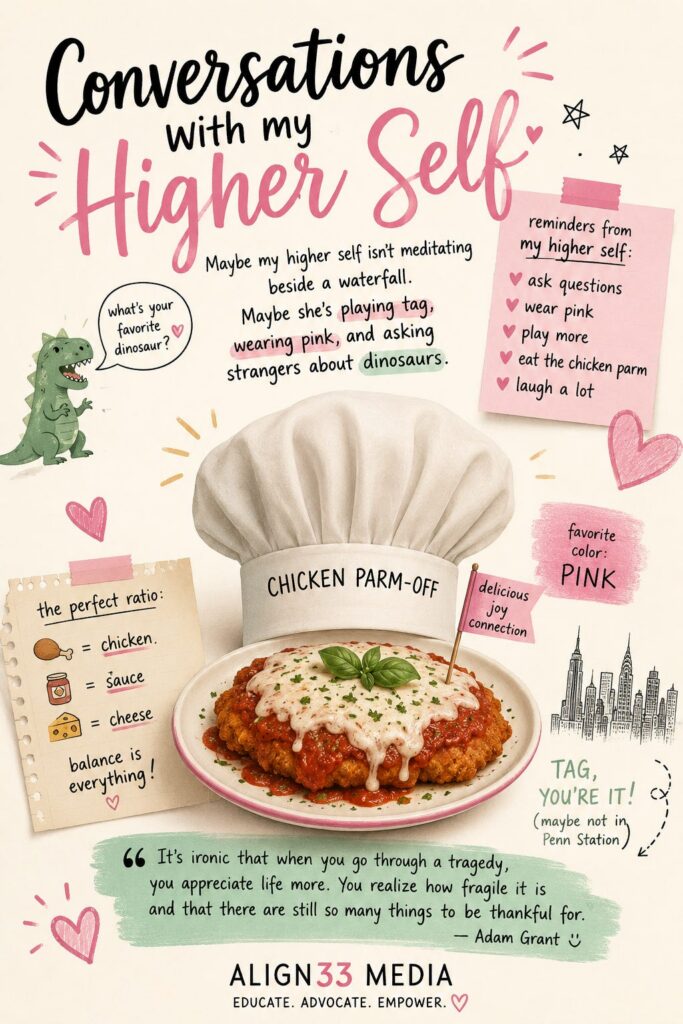
For a long time, she didn’t want to get better because she couldn’t visualize what “better” looked like. The concept of a “higher self” made her roll her eyes — it felt too abstract, too kumbaya. But the more she examined that resistance, the more she realized she hadn’t always been self-destructive. As a child, she was imaginative, curious, and operated on “when” statements rather than “if” statements. She trusted her gut, asked questions without fear of judgment, and played without needing a reason.
Watching her own son move through the world with that same uninhibited curiosity reminded her of who she used to be — before she began editing herself for the approval of others, before her eating disorder made everything a measurement, a consequence, or a source of fear.
She reflects on how adults lose that playfulness, how life becomes something to manage rather than something to experience, and how her eating disorder shrank her world further still. A chicken parm competition she organized for her husband’s birthday — complete with chef hats, a ranking system, and strong opinions about the chicken-to-sauce-to-cheese ratio — becomes an example of what it looks like to reclaim that sense of play.
The post is ultimately about recognizing that the “higher self” isn’t a stranger. It’s the version of you that existed before the world convinced you to stop trusting yourself.
Originally published on morgandiprimo.substack.com.