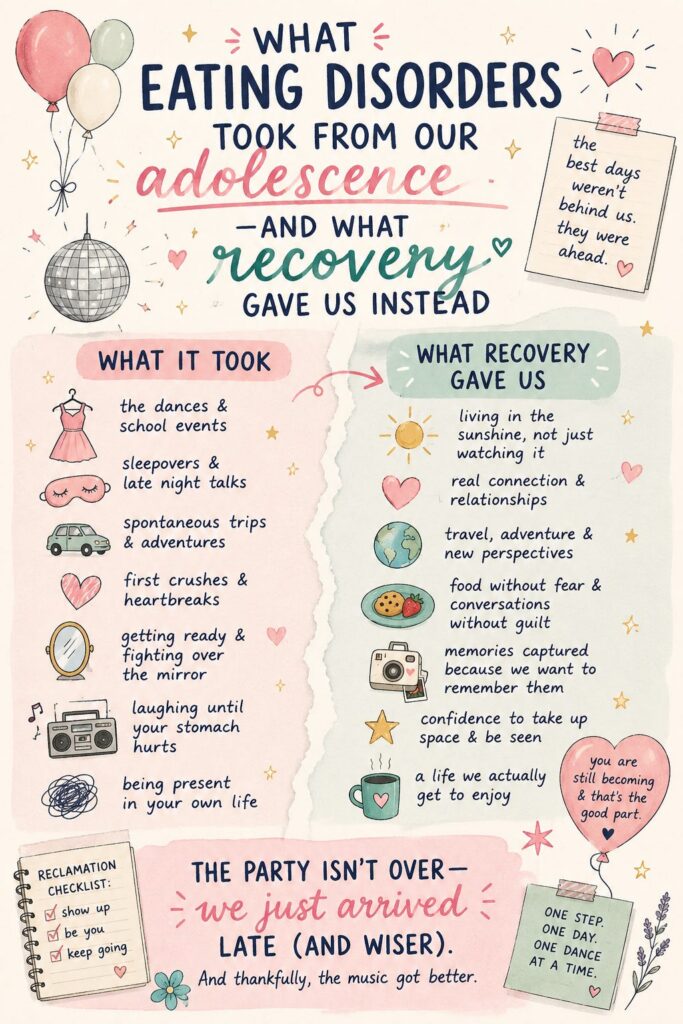
There is a particular kind of grief that comes with having an eating disorder during adolescence — not always the kind that shows up on a medical chart.
In this co-authored piece, Morgan DiPrimo and Alyssa Hamel, DNP, PMHNP-BC, reflect on the losses that never make it into a treatment plan: the dances, the sleepovers, the spontaneous trips with friends, the ordinary rites of passage that feel completely unremarkable when you are living them — until you realize you didn’t really get to.
Alyssa writes about missing junior prom. She had been admitted for inpatient eating disorder treatment during her sophomore year, and by junior prom the eating disorder had not simply packed its bags and disappeared. Recovery did not happen on a convenient academic calendar. She also reflects on something stranger: sometimes you do not physically miss the milestone. You miss it while standing directly inside it — your body technically present, but you not really there.
Morgan was diagnosed with anorexia at sixteen. She describes how much of her adolescence happened around her while her brain was somewhere completely different. Everyone else seemed to be doing normal teenage things — dating, driving, going out, fighting with their parents over curfews — while she was mentally elsewhere. The eating disorder did not just take experiences. It took presence.
Both writers also reflect on what recovery gave back: not the lost years themselves, but a different relationship to being alive in the present. The piece is a meditation on grief, development, and what it means to grow up when an illness is competing for the same years.
Originally published on morgandiprimo.substack.com.